Guide · Verified 2026-08-13
China Train Tickets Sold Out: What Tourists Can Do
A route shows "sold out" on one app, "reservation submitted" on another, and seats reappear later — for a first-time visitor this feels risky, because a hotel, an attraction slot, or a flight may depend on that one rail segment. Here's the practical decision tree, not tricks or guaranteed last-minute seats.
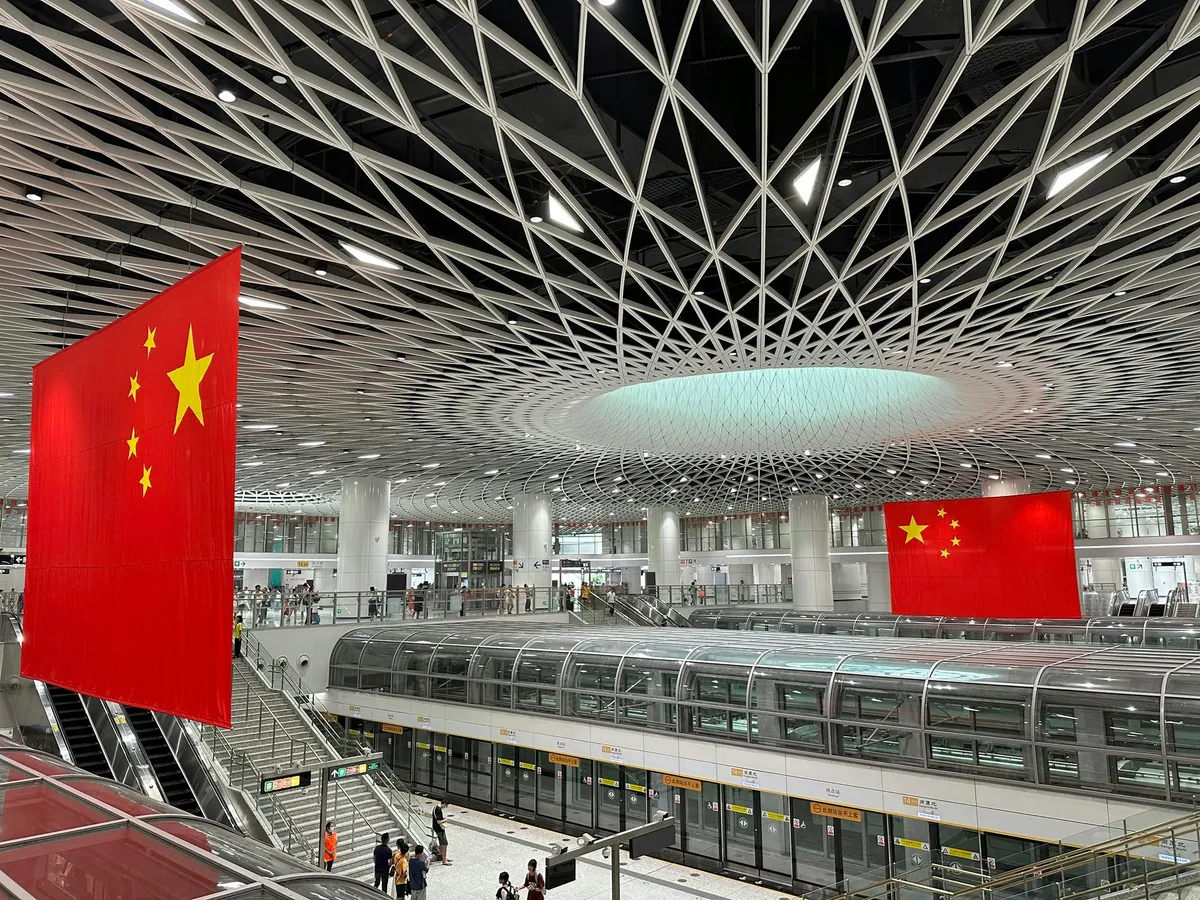
First, decide whether it's really sold out
"Sold out" can mean several different things: every seat in your selected class is gone, your booking platform simply has no inventory for that train, tickets haven't opened yet for your date, or there's a temporary mismatch between an English booking site and the official railway system.
Check the exact route in more than one place — the official 12306 app or Trip.com, keeping station names exact. Large cities often have several stations, and "Shanghai," "Shanghai Hongqiao," and a suburban station can have completely different availability. Also check seat class: second class may be sold out while first class still has seats, or the reverse on business-heavy routes.
If your booking says "reservation submitted," that's a request, not a confirmation. Set yourself a deadline — if it hasn't confirmed by a certain time, switch to Plan B.
One more possibility worth ruling out before you panic: on the Beijing–Shanghai lines, seats for a date can be committed to reservations before the ordinary sale even opens. Our booking guide explains the 60-day reservation window introduced in July 2026, including who it does and doesn't cover.
The standby queue, and what it's actually worth
When a train shows no seats, 12306 offers to put you in the standby queue (候补) instead: you pay up front, and if a seat is released the system buys it for you automatically. English guides tend to describe this in one line — "there's a waitlist" — and leave you guessing about the odds. The Chinese-language numbers are more useful.
China Railway's own published figure is that standby requests convert more than 70% of the time on average. But the queue is ordered by when you joined it, and that changes everything: analyses in Chinese railway coverage of the Spring Festival rush put conversion at roughly 78% for requests filed within 30 minutes of the sale opening, against about 13% for requests filed a day later. Same train, same queue — the difference is how early you got in line.
Two practical consequences. First, if your train sells out in the opening minutes, join the queue immediately rather than spending an hour deciding — the first half hour is where the odds live. Second, widen the net: China Railway's published limits let one account hold several standby orders at once, covering multiple train numbers across a few dates, and Chinese coverage is consistent that queuing for one specific train is far weaker than queuing for a cluster of trains around the same time. Accepting a standing-room ticket where the route offers one raises the odds again.
Why China's trains sell out quickly
High-speed rail is mainstream transport in China, not a niche tourist route — business travelers, students, and families compete for the same seats you want. Friday evenings, Sunday returns, and routes between nearby megacities (Beijing–Shanghai, Chengdu–Chongqing, Shanghai–Hangzhou) can sell out fast even on an ordinary week.
Holidays make it worse. If your trip crosses a public holiday or a weekend near one, check the crowd calendar before assuming same-day tickets will be fine — and remember that a city pair can have many daily trains while only two or three match your actual checkout time, attraction slot, or connecting flight.
Your best options when a train is sold out
Flexibility first. Search earlier and later departures the same day — a 7am or 9:30pm train may be less comfortable but can save the itinerary. Check all relevant stations on both ends; a train from a less convenient station beats losing a whole day.
Compare seat classes. If second class is gone, first class may still be open. If all high-speed seats are gone, check regular-speed or overnight trains — slower, but they work when the destination matters more than speed.
Try a split route. Instead of City A to City C directly, search City A to City B and City B to City C separately. Give yourself real transfer time if you go this way — separate tickets mean separate risk, especially if you have to change stations or clear security again.
Have a non-rail backup. For short hops, a bus or private transfer can work; for long routes, a domestic flight is often the better fallback. Use the budget calculator to weigh the full cost — ticket price plus taxis, an extra hotel night, and lost sightseeing time.
All of that means running the same search several times — different departure times, different stations, split legs. That's painful on 12306's Chinese interface, which is the practical reason most visitors end up doing the comparison on an English-language search instead. It's an affiliate link — it costs you nothing extra and helps pay for this site; 12306 remains the zero-fee option if you can navigate it.
What to do with Trip.com or agency reservations
If your order is confirmed, save the app screen, order number, and any email. Your passport is the identity document for train travel, so the passenger name and number need to match your document exactly. If the order is still pending, ask support a specific question: is my ticket issued, or is this still only a reservation request?
Don't assume a pending reservation will clear just because the platform took payment — review any automatic-change settings before you agree, since a train that arrives at midnight may not fit your hotel or onward plan. For a high-stakes day, such as catching an international flight, don't rely on a waitlist; book a confirmed earlier train, a flight, or an overnight buffer instead.
Build a backup plan before travel day
A good backup plan has three parts: a latest acceptable arrival time, one alternate transport option, and one schedule adjustment you're willing to make — decide these before the problem becomes urgent. If your destination has timed attraction tickets, check with the venue before assuming you can still use them if you arrive late; some entries are strict, some hotel check-ins absorb it easily.
Keep luggage simple on uncertain rail days — heavy bags make station changes and late-night arrivals harder. Keep medicine, chargers, and your passport in your day bag rather than a checked case. And avoid scheduling a same-day long-distance train right before a nonrefundable international flight; if you must, choose a much earlier departure than feels necessary.
Frequently asked questions
- Can I buy China train tickets at the station if online tickets are sold out?
- Sometimes the counter can help with alternatives, but it doesn't have a hidden pool of seats — if a train is genuinely sold out in the official system, the counter can't create availability. Staff can still help you find another train, route, or seat class. Bring your passport and have the Chinese station names ready.
- Do China train tickets become available again after selling out?
- Yes, especially when other passengers cancel or refund. But it's not predictable enough to plan a tight itinerary around. Book quickly if seats reappear, and hold a confirmed backup rather than waiting until the last moment on a route that controls your hotel, flight, or attraction ticket.
- Is a waitlist safe for a must-make connection?
- No — treat a waitlist as a bonus chance, not a plan. Decide in advance when you'll stop waiting and switch to another confirmed train, flight, bus, or overnight stay.
- What are the odds a China train standby (候补) request actually converts?
- China Railway publishes an average above 70%, but timing dominates the average. Analyses in Chinese railway coverage of the Spring Festival rush report roughly 78% conversion for requests filed within 30 minutes of the sale opening, against about 13% for requests filed a day later. Join the queue immediately rather than deliberating, spread the request across several trains around your preferred time rather than one, and still hold a confirmed backup if the trip depends on it.
- Should I take a slower train instead of a sold-out high-speed train?
- Sometimes. A slower or overnight train can save a route when high-speed seats are gone, especially if it's direct. Weigh travel time, arrival station, and luggage comfort — a cheap slow train that lands exhausted at 4am isn't always worth the saving.
- How early should I book China train tickets?
- As soon as the route opens — official sales open 15 days before departure on 12306, with platforms like Trip.com taking pre-orders slightly earlier that they fulfill the moment inventory opens. For holidays, weekends, and popular city pairs, book the day sales open; see our full guide on how to book for the platform comparison.
Verified 2026-08-13. Sale windows and refund tiers are set by China Railway and occasionally change — re-check anything booking-critical close to your dates. Tell us if a step no longer matches.