Guide · Verified 2026-08-10
The China That Isn't on the Ticket
Every visitor gets the Great Wall and the Terracotta Army. Almost nobody gets the six o'clock market, the park chorus, or the ninety minutes in a bamboo chair with someone cleaning your ears. These cost almost nothing, need almost no Chinese, and are what people actually remember afterwards.
The morning market, before nine
Every Chinese neighbourhood has one, and it is finished by mid-morning. Live fish in shallow tubs, vegetables you won't recognise, a woman making rice noodle rolls to order, someone weighing tofu on a hand scale. It's the least performed thing in any Chinese city — nobody there is running it for visitors.
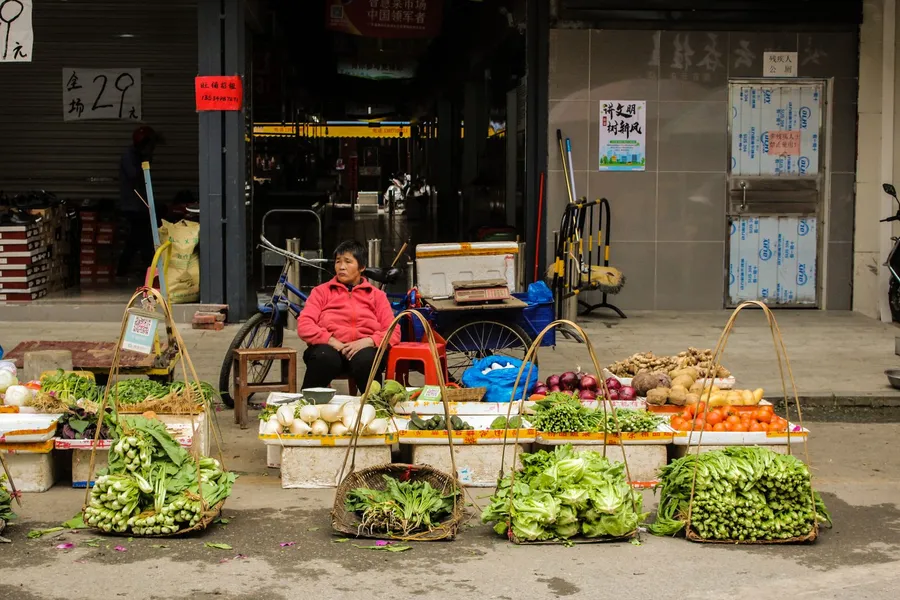
Go hungry and buy breakfast as you walk. Pay by QR code like everyone else; almost no stall wants cash any more, which is why the Alipay setup matters before you arrive, not after.
A city park at dawn
Chinese parks between six and eight in the morning are the busiest, most sociable places in the country. In one loop you'll pass tai chi groups, a badminton game with no net, a retiree writing enormous characters on the paving stones in plain water — dishu, ground calligraphy, which evaporates as he writes — a chorus with an accordion, and people walking backwards on purpose.
A Chengdu teahouse, and the ear cleaning
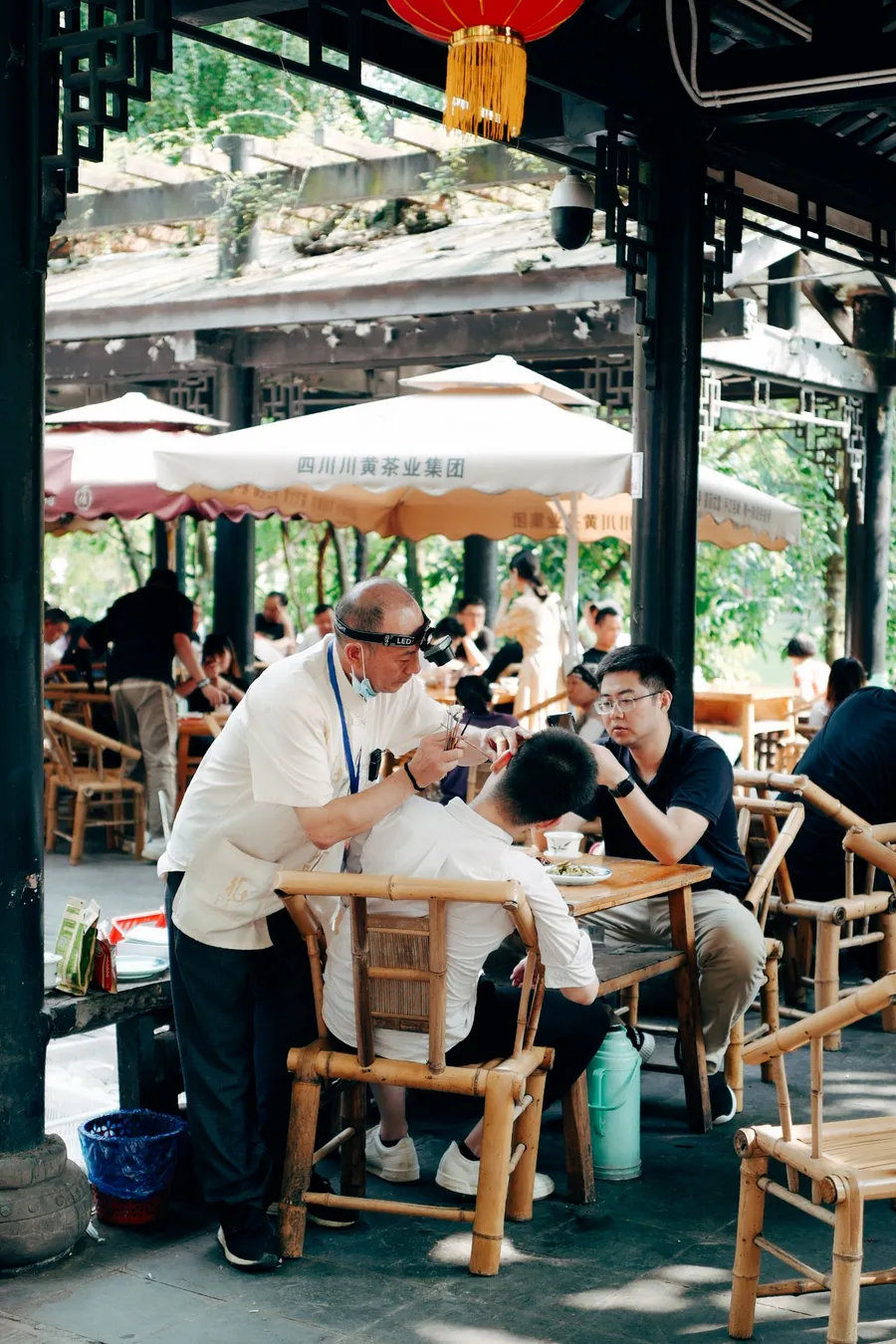
Sichuan teahouse culture is an afternoon, not a drink. You take a bamboo chair under the trees, pay once for a covered cup of green tea, and someone comes round with a copper kettle refilling it for hours while you do nothing in particular. That's the whole activity, and it's wonderful.
Then there are the ear cleaners — caiěr — moving between tables with a headlamp and a roll of thin steel picks and tuning-fork vibrators. It looks alarming and feels extraordinary. Heming Teahouse in People's Park is where most visitors first see it. Tea typically runs ¥20-60; the ear cleaning is charged separately, usually somewhere around ¥50-100 depending on how long it takes.
Square dancing at dusk
Come evening, a speaker appears on a plaza and thirty to a hundred people — mostly women, mostly retired, occasionally a very committed man at the front — dance in loose formation for an hour. It happens in every city, every night, in squares, park forecourts, and the paved space outside shopping centres.
Standing and watching is completely normal. Joining the back row is also completely normal, and someone will almost certainly wave you in if you look like you might. Nobody expects you to know the steps.
KTV, which is not a karaoke bar
Chinese KTV means a private room you rent by the hour with your own friends, your own sofa, and a tablet to queue songs. No stage, no strangers, no waiting your turn in a crowded bar. It is the default way people in their twenties spend a Friday.
You pay for the room plus drinks; afternoon and weekday slots are dramatically cheaper than Friday night. Most systems have an English-language song category buried in the menu — hand the tablet to a translation app if you can't find it.
The bathhouse, if you're up for it
Northern China's public bathhouses are an institution, especially in winter: hot pools, a steam room, and — the part that defines the experience — an optional vigorous scrub from an attendant that removes a layer of you that you did not know was there. Men's and women's sections are entirely separate.
Standing at a breakfast counter
Chinese breakfast is a street activity: soy milk and a fried dough stick, steamed buns handed over in a paper sleeve, a bowl of noodles eaten standing at a counter facing the street at seven in the morning. Two or three yuan for the small things, ten to fifteen for a full bowl.
This is also the most reliable everyday meal for Muslim travellers — the Lanzhou beef noodle shops that blanket the country open early and are halal by tradition.
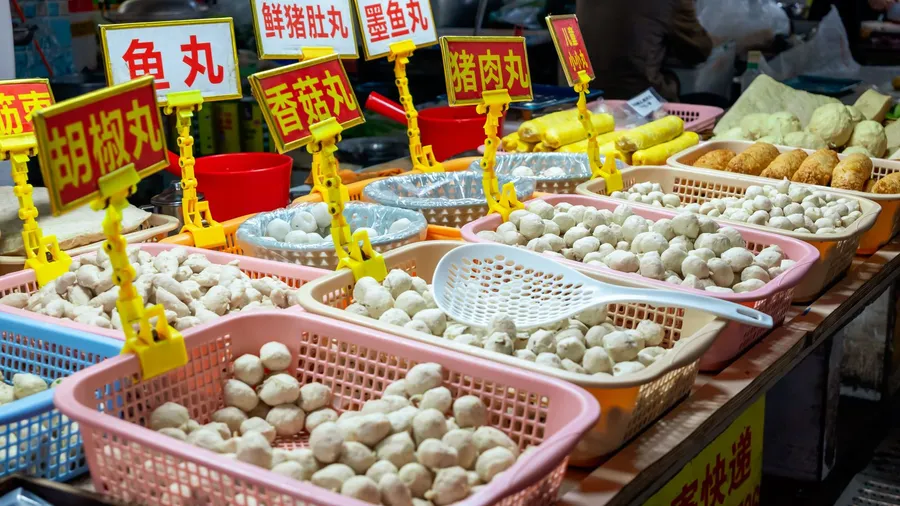
The train ride as the thing itself
Two hundred and fifty miles an hour, a seat you can stretch out in, a trolley selling instant noodles and vacuum-packed chicken feet, and the country going past the window. Plenty of visitors treat Chinese high-speed rail purely as transport and miss that it's one of the more remarkable things they'll do all trip.
Book a window seat, buy a pot of noodles from the trolley because everyone else will, and watch how quickly farmland turns into a city of four million you've never heard of. Our ticket guide covers the 15-day booking window and the passport-is-your-ticket rule.
Frequently asked questions
- Are these things tourists are actually welcome at?
- Yes — every one of them is ordinary public life, not a closed community event. Chinese public space is unusually relaxed about strangers joining in; the square dancers in particular will wave you into the back row. The etiquette is the same as anywhere: watch first, follow what everyone else is doing, don't photograph faces without asking.
- Do I need Chinese to do any of this?
- Almost none of it. Markets and breakfast counters are point-and-pay, teahouses refill without being asked, and dancing needs no words at all. KTV is the one where a translation app helps, mostly for picking songs — though most systems have an English-song category.
- What time of day matters most?
- Early and late. Chinese cities do their best public living before 9am and after 7pm — markets and parks in the morning, squares and night markets in the evening. The middle of the day, especially in summer, is the dead zone. Plan the famous sights for then.
- How much should any of this cost?
- Very little, which is part of the point. A market breakfast runs a few yuan; a teahouse afternoon with endless refills is typically ¥20-60; square dancing and park life are free. KTV and bathhouses are the two that add up, and both are still cheap by Western standards.
- Is it rude to just watch?
- No. Standing and watching is itself a normal thing to do in a Chinese park — you'll be one of several. If someone gestures for you to join, they mean it.
Verified 2026-08-10. Prices are typical ranges observed in mainland cities, not fixed rates. Tell us if something here is out of date.