Guide · Verified 2026-07-27
China 20-Day Itinerary for Nature and Culture
Twenty days sounds generous until you start adding Beijing, Zhangjiajie, Guilin, Yangshuo, Lijiang, Shanghai, Hong Kong, Xi'an, Chengdu, and one or two ancient towns. The biggest mistake isn't choosing the wrong city — it's building a route where every beautiful place is separated by a draining transfer day.
Start with the right route shape
For most first-time travelers, the cleanest 20-day structure runs north-to-south or east-to-west, not a loop that keeps backtracking through the same hubs. One balanced route: Beijing, Xi'an, Chengdu, Zhangjiajie, Guilin/Yangshuo, and Hong Kong or Shanghai. A scenery-first version: Beijing, Zhangjiajie, Guilin/Yangshuo, Lijiang, and Shanghai — fewer city changes, more domestic flights.
Keep the route to six main bases, five if you want slower mornings and room to recover from weather delays. A base isn't just a hotel night — it's a place where you actually get to use the day. One-night stops are fine when they're on the way, risky when they require a special detour: if an ancient town costs most of two days door to door, ask whether it beats one more relaxed day somewhere you're already staying.
A practical 20-day route
Here's a route that gives you history, food, mountains, karst scenery, and a softer finish without trying to cover every region.
Days 1–4: Beijing. Keep the first day light — arrival, a neighborhood walk, early sleep — then use full days for the Forbidden City area, the Great Wall, hutongs, and museums. Beijing rewards time and helps you calibrate the scale of the country before heading south.
Days 5–7: Xi'an. Train or flight depending on price and timing. Xi'an packs a compact history block — the Terracotta Army, the city wall, Muslim Quarter food — into two full days comfortably, three if you don't like rushing.
Days 8–10: Chengdu or Chongqing. Pick one as your food-and-Sichuan anchor rather than splitting time across both. Chengdu suits pandas, teahouses, and a Leshan day trip; Chongqing is more vertical and dramatic, with strong night views and spicier food.
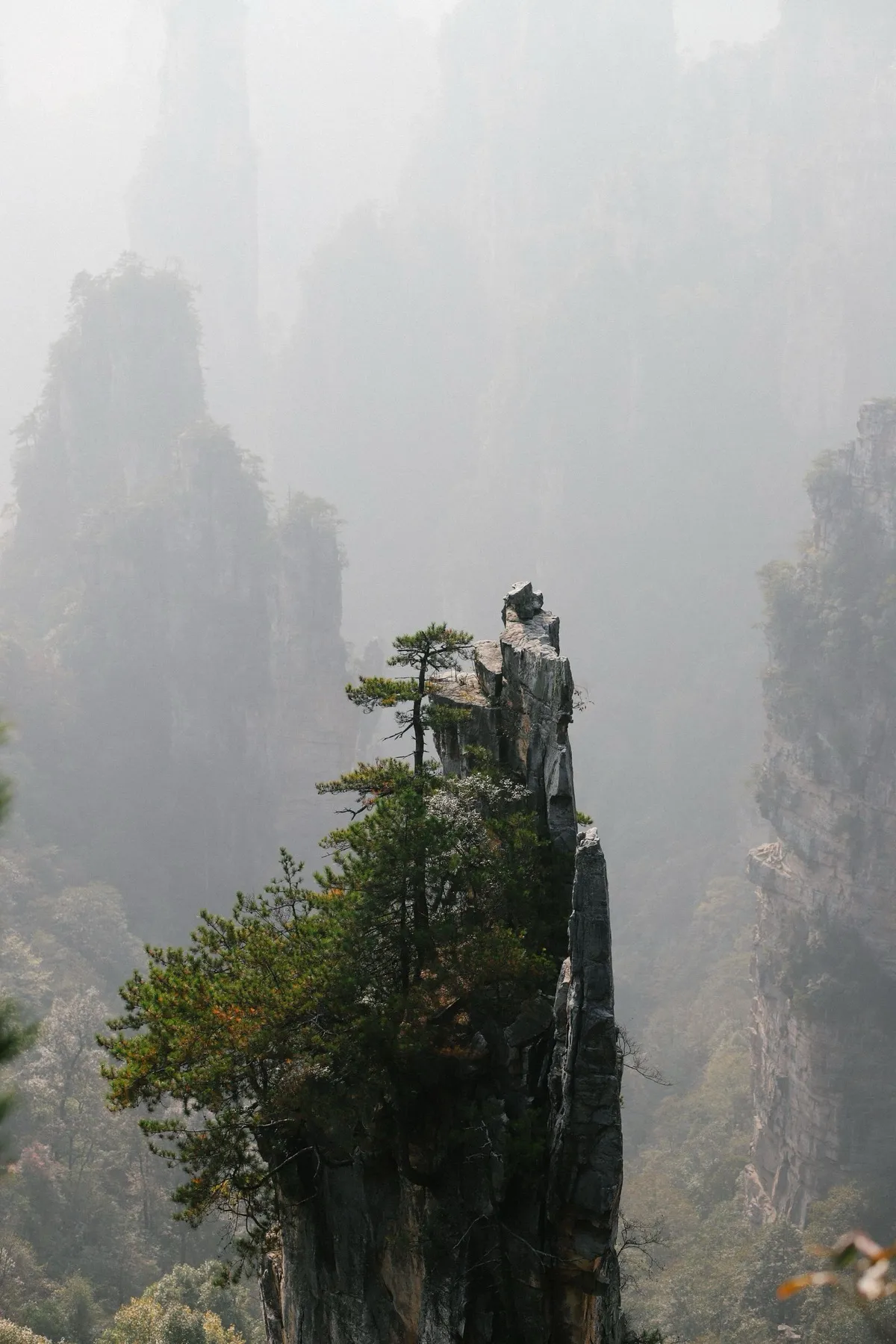
Days 11–14: Zhangjiajie. Give this real time — one full day for the National Forest Park, a separate day for Tianmen Mountain, and ideally a third day as insurance against rain, mist, or tired legs. Clear weather on the extra day can go toward a second forest-park zone.
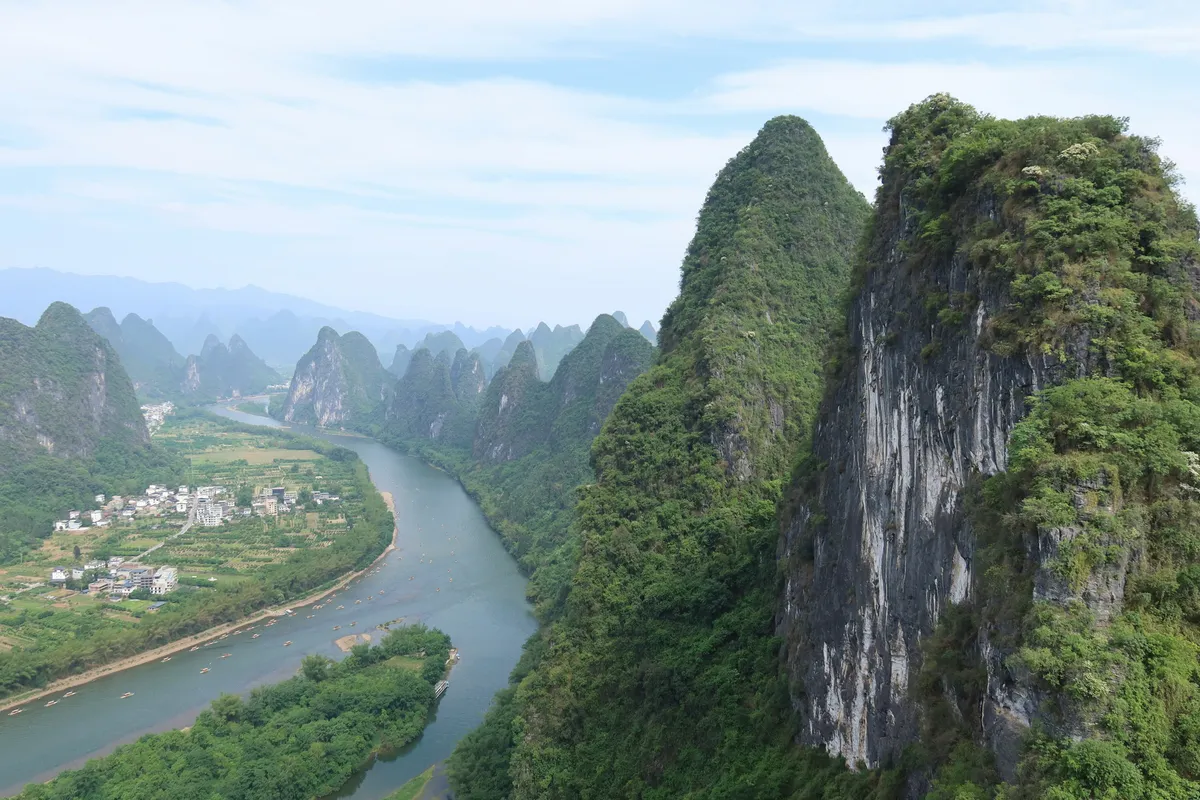
Days 15–18: Guilin, Longji, and Yangshuo. Don't treat this as one place. Guilin is a transport hub more than a destination; Longji rewards an overnight rather than a rushed in-and-out; Yangshuo is where most travelers find the slower river-and-countryside pace they came for. For a nature-focused trip, base most nights in Yangshuo and use Guilin only when logistics require it.
Days 19–20: Hong Kong or Shanghai. End somewhere easy. Hong Kong suits an international flight out and a softer landing into English signage; Shanghai suits a route that naturally returns east, or a modern-city finale.
Where to add Lijiang, Pingyao, or ancient towns
Lijiang, Pingyao, Fenghuang, and similar towns are tempting because they look nothing like the big cities. The real question isn't whether they're worth visiting in isolation — it's whether they fit your route without stealing two better days.
Lijiang works best when Yunnan is a real chapter of the trip — Kunming, Dali, Lijiang, maybe Shangri-La. Dropping it into a Beijing–Zhangjiajie–Guilin–Shanghai route can work, but it often forces an awkward flight chain and thins out time in both Yangshuo and Zhangjiajie. If Yunnan is a must, cut Xi'an or Chengdu rather than adding Lijiang on top of an already full route.
Pingyao fits more naturally between Beijing and Xi'an, but only at a slower pace — one rushed day there can disappear into station transfers. Fenghuang can pair with Zhangjiajie if you check the exact bus or train timing before booking nonrefundable hotels; a one-night side trip from a major hub needs the same caution, since a short train ride on paper can still become a long door-to-door detour.
How to keep nature days from becoming transfer days
Plan by door-to-door time, not map distance. A transfer day includes packing, checkout, the ride to the station, passport checks, the journey itself, arrival transport, check-in, and the mental cost of finding dinner somewhere new — a "three-hour train" can easily become six hours of usable travel time.
Protect full days around mountain and river areas — Zhangjiajie, Longji, Yangshuo, and similar places aren't ideal right after a late arrival or before an early departure. Weather matters too: late spring and early summer can bring humidity and rain to southern and mountain areas, and mist can make Zhangjiajie magical or simply invisible depending on the day. A buffer day isn't wasted — it's what lets the scenery actually happen. Check our month-by-month breakdown before locking dates, and run the trade-offs between trains, flights, and extra hotel nights through the budget calculator — the cheaper route sometimes costs more in fatigue than it saves in money.
Booking and on-the-ground basics
Book the hard-to-change pieces first: international flights, the first two nights, major domestic hops, and popular attraction days. For trains, assume passport-name accuracy matters — if your passport carries a middle name or multiple surnames, keep the spelling consistent across every hotel, train, and flight booking. See our train ticket guide for the booking mechanics themselves.
Payment setup is part of itinerary planning, not an afterthought — a beautiful route gets stressful fast if you land without mobile payment working. Set up Alipay and WeChat Pay before departure, then keep a small cash backup for edge cases. Before you lock dates, run your passport through the visa-free checker and work through the pre-trip checklist to catch the rest early.
What to cut if the trip feels too full
If your draft itinerary has nine or ten stops in 20 days, cut before you book. First cut special detours that require a one-night stay and awkward transport. Then cut duplicate city energy — you likely don't need both Chengdu and Chongqing, both Shanghai and Hong Kong, or both an ancient town and a second small scenic village.
Don't cut all the rest, though. A workable 20-day route keeps at least two lighter days — one after arrival, one mid-trip after several transfers. A lighter day can still include food, laundry, a park, or a night market; what it shouldn't include is a 6am checkout followed by three modes of transport.
Frequently asked questions
- Is 20 days enough for a first trip to China?
- Yes, if you limit yourself to five or six main bases. It's not enough for every famous region — choose a clear theme, such as history plus nature, and leave real space for weather and transfers rather than trying to see everything.
- Should I include both Zhangjiajie and Guilin/Yangshuo?
- Yes, if nature is a priority and you give each area proper time. Zhangjiajie is a mountain-and-park experience; Guilin/Yangshuo is river, karst, and countryside. The risk isn't overlap between them — it's rushing both into short, weather-sensitive windows.
- Is Lijiang worth adding to a 20-day China itinerary?
- Only if Yunnan becomes a real part of the route (Kunming, Dali, Lijiang, maybe Shangri-La). Bolting it onto an already-full Beijing–Zhangjiajie–Guilin–Shanghai trip usually costs too much time in flights and transfers — cut another major stop first rather than adding Lijiang on top.
- Should I end the trip in Shanghai or Hong Kong?
- End wherever gives you the cleanest flight and least backtracking. Shanghai suits an eastern route or a modern mainland finale; Hong Kong works well after Guilin/Yangshuo and can be an easier international exit.
- How many rest days should a 20-day China trip include?
- At least two lighter days — one soon after arrival, one mid-trip after a run of transfers. They don't need to be empty: food, laundry, a park, or an evening walk all count, as long as they don't depend on tight transport timing.
Verified 2026-07-27. Rail links, attraction ticketing, and seasonal weather patterns shift year to year — re-check booking-critical details close to your travel dates. Tell us if a step no longer matches.