Guide · Verified 2026-07-21
China Typhoon Season Travel Safety
Summer travel in China isn't automatically a bad idea — plenty of visitors have a great August or September trip. The problem is planning as if weather is a background detail, then getting surprised by heat, a sudden downpour, a flight delay, or a city-specific warning. Keep the trip; just build it for weather.
Start with the right risk mindset
Don't treat "typhoon season" as one fixed condition across the whole country. Coastal and southern cities — Shanghai, Hong Kong, Shenzhen, Xiamen, Guangzhou — can be affected by tropical systems. Inland cities like Chongqing, Chengdu, Xi'an, and Beijing have a different problem: heat, thunderstorms, and local flooding after heavy rain. Mountain and river destinations add another layer, since a landslide or road closure can affect one small area even when the city center is fine.
Your first decision is about flexibility, not panic. Nonrefundable flights on the exact day a storm is approaching carry real risk; buffer time, refundable hotels, and train alternatives make the same weather system much less scary. Before you finalize dates, check the crowd calendar too — delayed flights are worse when every later seat is already sold to holiday traffic.
Your first decision is about flexibility, not panic.
Check weather like a traveler, not a meteorologist
A ten-day weather app icon isn't enough. Look at three layers: the city forecast, the official warning level, and your transport provider's own status page. For Hong Kong, the Hong Kong Observatory publishes the tropical cyclone warning signal (1, 3, 8, 9, 10) that determines whether ferries, schools, and many businesses close — a Signal 8 or above is the real threshold to plan around. Mainland China uses a national four-color warning scale (blue, yellow, orange, red, in rising order of severity) issued by the China Meteorological Administration for typhoons, rainstorms, and related hazards; if you can't read the local alert, your hotel front desk can usually translate it in a sentence.
What matters most isn't "rain: yes/no." Ask whether the forecast is scattered showers or persistent heavy rain, whether there's a thunderstorm, gale, or landslide warning attached, and whether your day depends on an outdoor mountain trail, river cruise, or a long airport transfer. A two-hour shower might only shift your lunch plans in Shanghai; the same rain can be a bigger problem on a cliff walkway or a tight connection.
Build a weather-proof itinerary
One rule: never put your most fragile, prepaid activity on your last possible day. If Hong Kong or Shenzhen is on the itinerary in late summer, keep one flexible day for ferries, beaches, or outdoor markets. If you're headed to Yunnan, Zhangjiajie, Guilin, or Chongqing during rainy months, avoid chaining every day to a nonrefundable transfer.
Pair outdoor and indoor options by neighborhood: a Bund walk in Shanghai pairs easily with museums or a café break; Chongqing's steep viewpoints and river walks swap for hot pot or shopping streets in heavy rain; Hong Kong's Victoria Peak and island ferries need a backup because wind and visibility matter as much as rain. Before you go, make sure your Alipay or WeChat Pay setup is tested — a cashless backup matters more, not less, when you're improvising around weather.
Flights, trains, and hotels during storms
Flights are usually the most weather-sensitive leg of a summer itinerary — coastal airports can delay or cancel departures when wind, lightning, or aircraft positioning backs up. Trains are generally steadier, but not immune; severe weather, flooding, or line restrictions can still delay high-speed rail. If you have a long-haul international flight to catch, avoid arriving in that departure city on the last train or final domestic flight of the night — keep your passport, medication, and a change of clothes in your carry-on so a canceled domestic leg doesn't strand your essentials in checked luggage.
For hotels, favor free cancellation on the riskiest days of your route. Refund rules for airlines, trains, and attractions depend on the provider and the official warning level in effect, not on whether the day "felt" stormy — check the specific policy rather than assuming a weather refund is automatic.
What to pack for rain, heat, and humidity
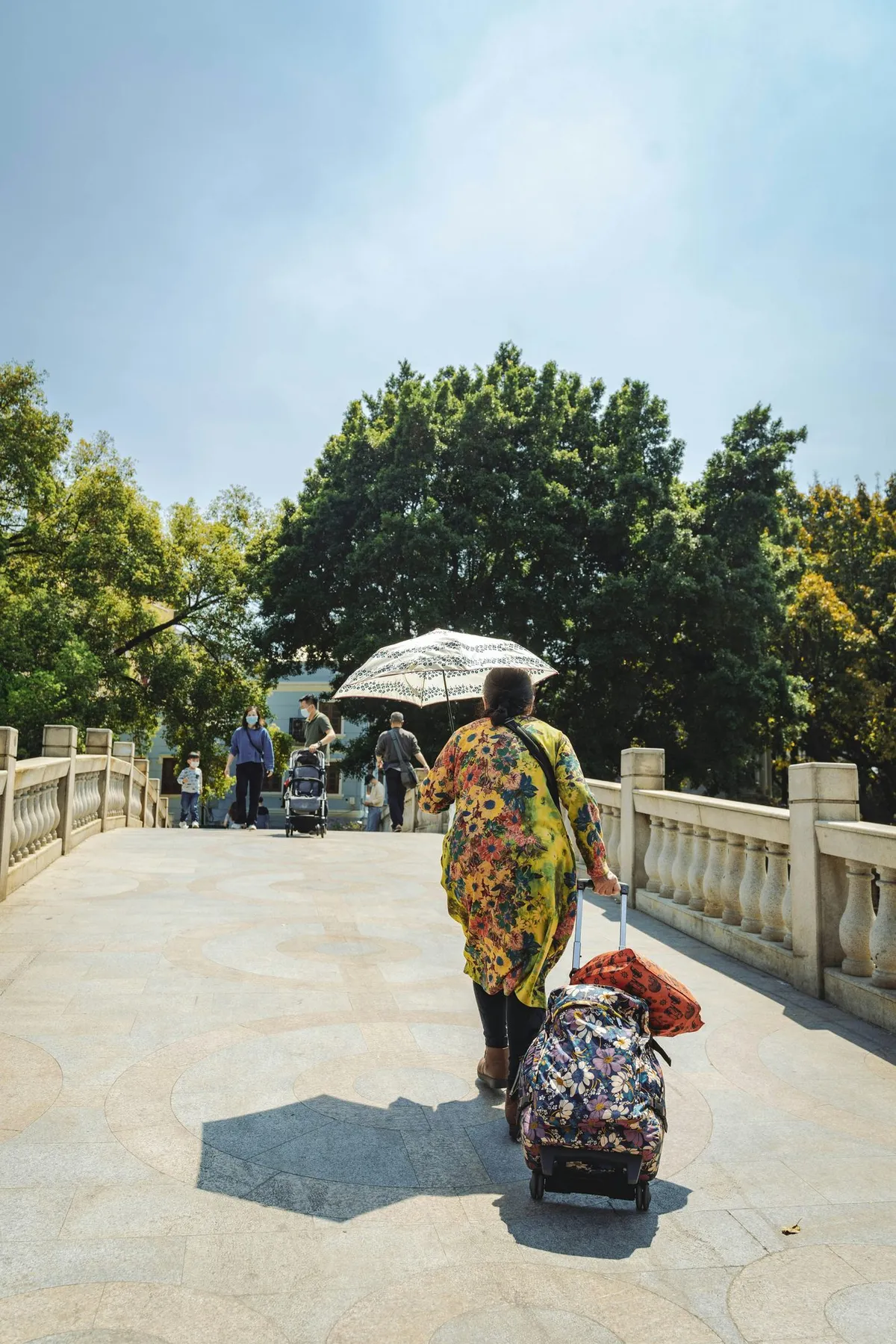
Keep the rainy-season list small and specific: quick-dry clothing, one light breathable rain shell, shoes that handle wet pavement, zip pouches for your passport and electronics, and a compact umbrella you can carry all day. Skip heavy rain gear unless you're hiking — a thick waterproof jacket turns miserable after ten minutes in humid city heat. For camera gear, pack silica gel and a microfiber cloth; for long walking days, a spare pair of socks solves more discomfort than most travelers expect. See the full China packing list for the rest of the kit.
Heat deserves equal respect. Schedule outdoor landmarks early, use taxis or the metro for the hottest transfers, and treat air-conditioned breaks as part of the plan rather than a failure — especially in Beijing, Xi'an, Chongqing, or Hong Kong in August, where heat, humidity, stairs, and crowds combine.
When to change plans — or stay put
Change plans when an official warning covers your exact area, transport is already delayed, your activity depends on clear visibility, or local staff advise against travel. Stay indoors during lightning, severe wind, flash-flood warnings, or an active landslide warning in a mountain or river area — and don't chase dramatic waterfront photos. If you're unsure whether a warning affects a whole city or just one district or mountain road, ask your hotel; local notices are usually more specific than an app icon.
Save China's national emergency numbers before you go: police 110, ambulance 120, fire 119, and the tourist hotline 12301 for English-language help.
Frequently asked questions
- Is it safe to visit China during typhoon season?
- Usually yes, but it depends on the city, dates, and current warnings. Typhoon season (roughly July–September, peaking August–September on the south and east coast) doesn't mean every day is dangerous — it means you need flexible bookings, daily alert checks, and backup plans for outdoor or coastal activities.
- Will summer rain ruin sightseeing in Shanghai or Hong Kong?
- Not always. Many days bring short heavy showers rather than all-day rain, but visibility, wind, and transport delays can still affect plans. Keep indoor backups and avoid scheduling your one must-do outdoor activity on the final day of the trip.
- Are trains more reliable than flights during bad weather?
- Often, but not immune — severe weather can still delay or suspend rail service. For an important connection, compare train and flight options, keep buffer time, and avoid a tight same-day transfer right before an international departure.
- What should I pack for China's rainy season?
- Quick-dry clothing, one light breathable rain shell rather than a heavy waterproof jacket, sandals or shoes that handle wet pavement, a compact umbrella, zip pouches for your passport and electronics, and a spare pair of socks. Add electrolyte packets if you're sensitive to heat and humidity.
- Should I cancel my trip if a storm is forecast?
- Don't cancel based only on a long-range forecast icon. Watch official alerts and your transport provider's status page for your exact city and travel date, and change plans based on real warnings or airline cancellations — not a ten-day weather app screenshot.
Verified 2026-07-21. Warning systems, rebooking rules, and hotline numbers are set by local authorities and individual carriers and can change — check the current official source for your exact city and dates before travel. Tell us if a step no longer matches.